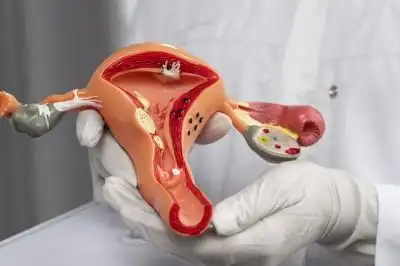
What is blockage or damage in the fallopian tube?
The fallopian tubes are the reproductive organs that connect a woman’s ovaries and uterus. Ovulation, which occurs approximately halfway through a menstrual cycle, is the monthly process by which an egg is transferred from an ovary to the uterus via the fallopian tubes.
A damaged fallopian tube makes it more difficult for an egg to pass through and enter the womb. A fertilized egg can become stuck in the tube and implant itself, leading to an ectopic pregnancy.
Because the ovaries release eggs in alternate months, the chances of getting pregnant decrease if only one tube is open. Consequently, egg fertilization is limited to every two months.
What are the symptoms of the blockage in the fallopian tube?
Blocked fallopian tubes are seldom associated with signs and symptoms. A considerable number of women do not realize their tubes are blocked until they begin to have difficulties conceiving.
An occasional cause of mild, consistent abdominal pain on one side is clogged fallopian tubes. This typically takes place in a hydrosalpinx, a particular kind of obstruction. This is the enlargement and filling of a blocked fallopian tube with fluid.
Pelvic inflammatory disease is a cause of a blocked fallopian tube, but it has symptoms too. For example, endometriosis can cause heavy and painful periods and deep aches in the lower belly. Your possibility of having blocked fallopian tubes might also increase.
What are the main causes of fallopian tube blockage?
Pelvic adhesions or scars are most often formed in the area of the fallopian tubes. Numerous things can lead to these, such as:
- Inflammatory disease of the pelvis: Hydrosalpinx or scarring may result from this disease.
- Endometriosis: Endometrial tissue can cause endometriosis in the tubes and lead to tubal blockage. Adhesions arising from endometriosis outside other organs may also cause obstructions of the fallopian tubes.
- STIs: In some cases, STI’s scan creates scar tissue that causes pelvic inflammatory disease such as from gonorrhea and chlamydia.
- Previous ectopic pregnancy: It can cause scaring of the Fallopian tubes
- Fibroids: These growths, especially where they affix to the uterus, can potentially obstruct the fallopian tube.
- Previous abdominal surgery: Pelvic adhesions can cause blockages in the fallopian tubes due to prior surgery, particularly on the tubes themselves.
How is a blocked fallopian tube diagnosed?
The diagnosis of fallopian tube obstruction can be made by hysterosalpingography (HSG) and laparoscopy.
HSG: This is an X-ray of the fallopian tubes and uterus obtained through passing a radiopaque dye through the vagina into the uterus. In healthy tubes, the dye overflows from the uterus and the fallopian tubes. If there is a block, the tube is not visualized. The swelling and coiling of tubes can be documented.
What are the treatment options for a blocked fallopian tube?
Your doctor might perform laparoscopic surgery to open up your fallopian tubes. This procedure aims to get rid of any adhesions or small bits of scar tissue that are blocking them. However, if there’s a lot of scar tissue or adhesions in the way, this method might not work to treat your fallopian tubes.
The surgical procedure aims to create an opening in the fallopian tube using one of the following techniques:
- Taking out scar tissue
- Creating a fresh fallopian tube aperture on the outside
- Allowing the fallopian tube to open internally
Options for treatment consist of:
- Fallopian Tube Recanalization (FTR): A non-operative procedure to reopen the womanʼs fallopian tubes (part of her reproductive system) is called fallopian tube recanalization (FTR).
- Neosalpingostomy, or salpingostomy: Salpingostomy (neosalpingostomy) is not the same thing as salpingectomy.
- Salpingectomy: Salpingostomy creates a fallopian tube opening; the tube is not removed.
- Fimbrioplasty (Replacement of the femur): Fimbrioplasty is a more descriptive term than salpingostomy since in procedure of salpingostomy, the fimbriae are irrelevant and all that is meant is opening the tube. Whether or not fertility outcomes will be obtained will depend upon the reconstruction of the fimbriae. Fimbrioplasty aims to relieve fallopian tube obstruction and maintain enough fimbriae function for the oocyte to be successfully captured and delivered.
- Treatment of Blocked Fallopian Tubes with IVF: In vitro fertilization (IVF) is a standard treatment for tubal disease-related infertility. For severely damaged, non-operable fallopian tubes and cases where tubal illness coexists with another reproductive issue, in vitro fertilization (IVF) is the sole option.
What are the risks and complications associated with untreated blocked fallopian tubes?
Ectopic pregnancy is the most frequent side effect of treatment for obstructed fallopian tubes. An egg can fertilize even if it becomes lodged in the partially obstructed fallopian tube. An ectopic pregnancy is an outcome that may require immediate medical attention or surgery.
An additional risk factor for ectopic pregnancy is surgery, including fallopian tube removal. Due to these dangers, doctors frequently advise otherwise healthy women with obstructed fallopian tubes to undergo IVF rather than surgery.
To sum up, tubal testing plays a significant role in the assessment of infertility. There is variation in the accuracy of tests. Although invasive, laparoscopy is the gold standard and can occasionally be used as a correction.
Laparoscopic surgery often resolves the obstruction and increases conceiving rates. IVF can assist you in becoming pregnant if surgery is unsuccessful. IVF is also suitable when there is a male component and old age.
How does a blocked fallopian tube affect fertility and the chances of conception?
Infertility is frequently caused by blocked fallopian tubes. The fallopian tube is where an egg and sperm meet to fertilize. An obstructed conduit may hinder their amalgamation.
After receiving therapy for clogged fallopian tubes, pregnancy is possible. The degree of the block and the type of treatment you receive will determine your chances of getting pregnant.
The likelihood of a successful pregnancy increases when the obstruction is close to the uterus. The chances of success are reduced if the obstruction is located close to the ovary at the end of the fallopian tube.
Following surgery for tubes damaged by an infection or an ectopic pregnancy, there is very little possibility of becoming pregnant. The answer may vary depending on what and how much of the tube needs to be removed.
Consult your physician before beginning therapy to learn about your chances of becoming pregnant successfully.
Are there any lifestyle changes or preventive measures to reduce the risk of fallopian tube blockages?
Some claim that fallopian tube blockages can be successfully removed using natural means. Even if certain lifestyle changes can reduce the risk, scientific data does not fully support these claims:
Sexually Transmitted Infection (STI) Prevention:
- Safe sex practices for the prevention of sexually transmitted infections (STIs): When engaging in sexual activity, always and appropriately use condoms.
- Routine examinations: Get STI screens regularly, particularly if you have several sexual partners.
- Treatment: If an STI is identified, get treatment immediately to avoid complications.
Prevention of Pelvic Inflammatory Disease (PID):
- Early STI intervention: Treat any STIs as soon as possible to reduce the risk of PID.
- Monogamy: Reducing the number of sexual partners can also aid in the prevention of PID.
- Observing good hygiene: Maintain proper genital hygiene to lower your chance of contracting bacterial infections.
Healthy Lifestyle:
- Management of stress: Exercise activities, such as yoga, meditation, or deep breathing, to help manage stress.
- Frequent exercise: Maintain a healthy weight through frequent exercise.
- Eating a balanced diet: Consists of fruits, vegetables, and whole grains.
Avoiding Smoking:
- Adverse Repercussions: Cigarette smoking raises the possibility of pelvic infections and other illnesses that might obstruct the fallopian tubes.
- Benefits of quitting: Reducing the risk of several health issues and improving general health are two advantages of quitting smoking
Frequent Exams:
- Exams for gynecology: To monitor your reproductive system’s health, schedule routine gynecological exams.
- Early identification: Resolving any underlying medical conditions immediately will help avoid consequences.
Why choose Tender Palm IVF & Fertility Center for Blocked / Damaged Fallopian Tube Treatment in Lucknow, India?
Tender Palm IVF & Fertility Center offers the best damaged fallopian tube treatment in Lucknow, India. We have an experienced team of fertility specialists and gynaecologists who use modern technology to diagnose and treat female infertility conditions such as damaged fallopian tubes. Our fertility specialists use advanced diagnostic tools like HSG, SIS, and laparoscopy to assess tubal blockages or damage. Our team follows international safety standards and has years of experience treating female infertility. We provide accurate evaluation of underlying causes, personalized treatment plans, and minimally invasive procedures with high success rates at an affordable cost. At Tender Palm IVF & Fertility Center, we ensure safe, effective, and result-oriented treatment for female infertility in Lucknow, India.