What is a varicocele?
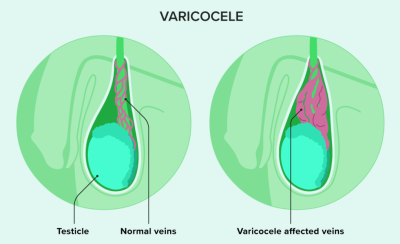
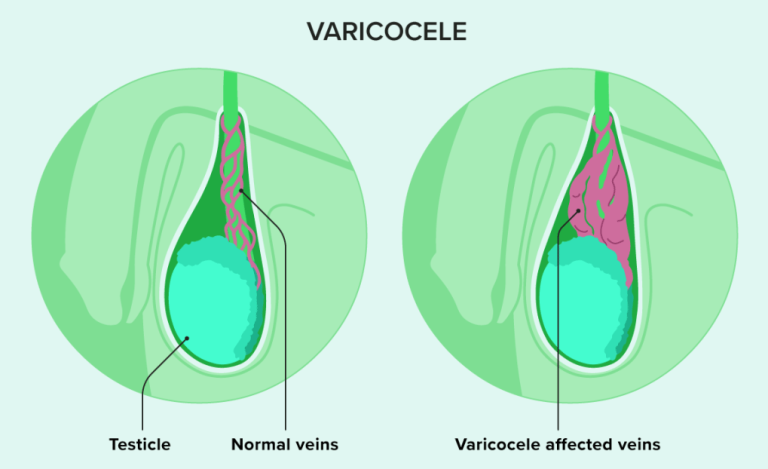
A varicocele is a condition in which the veins in the scrotum (the skin pouch that contains the testicles) swell. The condition arises from malfunctioning vein valves in the spermatic cord, which lead to blood accumulation and vein enlargement. This results in the creation of a vein that resembles varicose veins that may appear in the legs.
Varicoceles can cause testicular pain, but that occurs in fewer instances. For a few individuals, varicocele can lead to sterility. If the varicocele does not irritate you, then there is no urgent requirement of any treatment.
What are the common symptoms of a varicocele?
Usually, varicoceles do not have any symptoms. However, you can feel:
- Dull aching in your scrotum or testicles, which usually goes away when you lie down.
- Scrotal or testicular enlargement.
- Testicular atrophy (the shrinkage of the testicles)
- Infertility is the inability of a person to conceive after a year or more of trying.
- A little protrusion over the affected testicle.
What are the main causes of varicoceles formation?
A spermatic cord supports each testicle. The arteries, veins, and nerves that supply these glands are also located within the cords. One-way valves within the healthy veins of the scrotum transfer blood from the testicles into the scrotum and back again to the heart.
If blood pools in the vein instead of flowing through it as it ought to, this would result in an enlargement. Varicocele development is slow.
How is a varicocele diagnosed?
A medical professional can diagnose a varicocele. They will take your past medical history, do a physical examination, and report on your main complaints.
During the physical examination, your doctor can ask you to stand up, inhale deeply, seal your mouth and nostrils, and exert pressure to expel air. That is the Valsalva technique. When you are tensed and hold your breath, they will check your scrotum for swollen veins. Your provider will assess the severity of a varicocele after confirming its existence. He might request you to conduct these tests in order to confirm the diagnosis further:
- Ultrasound of the Pelvis: Your doctor can perform a noninvasive imaging treatment called a pelvic ultrasound to view the veins in your testicles in amazing detail. It is the most common imaging test physicians order to diagnose varicoceles.
- Analysis of semen: You will masturbate into a specific container during a semen analysis. After that, your doctor will send a sample of your semen to a lab, where technicians will check for sperm presence and general health. If the medical professional believes that your varicocele is affecting your fertility, they will perform a semen analysis.
- Blood examination: Your provider will draw a small blood sample using a tiny needle during the blood test. A lab professional will examine the blood sample to measure hormone levels, such as testosterone and follicle-stimulating hormone (FSH).
What are the available treatment options for varicocele?
The severity of your varicocele will determine how it is treated. A doctor might suggest one of the following at-home therapies for low-grade varicoceles:
- No treatment: If the varicocele does not irritate you or interfere with your ability to conceive, you might not need treatment.
- Changes to your normal routine: Some painful activities may have to be reduced or curtailed for a period of time. Symptoms may be alleviated by exercise and with prolonged time on your feet but symptoms do not develop while wearing snugger underwear such as spandex, elastane, or a jockstrap.
- Ice: Applying ice or cold packs to your scrotum may reduce pain and discomfort. Avoid getting ice on your skin directly. Tie a cloth around the ice or cold packs. Use ice packs for no more than fifteen minutes at a time.
- Drugs available over-the-counter (OTC): Any scrotal or testicular pain can be eased with the use of nonsteroidal anti-inflammatory medicines (NSAIDs), such as ibuprofen and naproxen. Speaking with a provider before using NSAIDs is a good idea, as not everyone can take them.
What is varicocele surgery?
When severe varicoceles cause pain or interfere with fertility, surgery is used to treat them with a varicocelectomy. The problematic veins in your body will be cut and their ends sealed shut by a surgeon specializing in diseases related to the reproductive and urinary systems. This reroutes blood flow in your scrotum to other healthy veins.
What are The potential risks varicocele surgery?
Potential Risks:
- Hydrocele: After surgery, a bag filled with fluid called a hydrocele may grow around the testicle. Most of the time, it goes away on its own, but occasionally, therapy may be needed.
- Hematoma: A hematoma is an accumulation of blood beneath the skin. Although it normally goes away on its own, it can cause discomfort and edema.
- Infection: Any procedure carries a risk of infection. Usually, antibiotics are administered to help avoid this.
- Recurrence: After surgery, a varicocele may, in rare instances recur.
- Nerve damage: There is a slight chance of nerve damage resulting in scrotal discomfort or numbness.
- Infertility: Although surgery frequently improves fertility, there is no assurance that problems with fertility will be fully resolved.
How can Varicoceles impact fertility and testosterone levels?
Men’s testosterone levels and fertility can be impacted by varicocele; here’s how:
Effect on the Rate of Fertility:
- Decreased Sperm Quality: Varicocele increases scrotal temperature due to the enlargement of veins; this can negatively affect sperm production and quality. Poor sperm morphology (shape), reduced sperm motility (moving ability), and low sperm count have been previously associated with high temperatures.
- Impaired Sperm Function: Varicocele may also be the cause for problems with the normal functioning of the testicles, in which their work concerning sperm maturation and release may be affected.
- Hormonal Imbalances: This scrotal temperature increase will disturb the highly sensitive hormonal balance needed to develop the sperm. Hormones involved in reproduction, such as testosterone, will become imbalanced.
Effect on Levels of Testosterone:
- Reduced Testosterone production: Sometimes varicocele can cause less testosterone production and research has yet to understand this phenomenon. The disorder may affect the testicles’ capability to produce testosterone.
- Hormonal Imbalances: These can result from varicocele from the reproductive system and cause a variation in the levels of testosterone, thus affecting sexual function and fertility and the general status of health.
Is it possible to prevent varicocele?
Varicoceles are not life-threatening; however, they can pose serious issues if you are trying to conceive a biological child.
If I have varicocele, what should I expect?
Many varicoceles sufferers don’t even exhibit any symptoms. Varicoceles won’t result in major or persistent health issues, though some people may feel minor pain when engaging in specific activities.
Varicoceles can sometimes cause problems with conception. Consult with a healthcare professional if you’re worried about your capacity to conceive a biological kid. They will try to assist you sort things out.
What time is best for me to visit a doctor?
If your partner is unable to conceive and you are experiencing symptoms of varicocele, see a healthcare professional. In addition to recommending the best course of action for you, they can diagnose varicocele.
Make sure you follow up with your provider for check-ups if you receive treatment for varicocele. They will keep an eye on your health and could request more testing to make sure your treatment is working.
Why choose Tender Palm IVF & Fertility Center for Varicocele treatment in Lucknow, India?
Tender Palm IVF & Fertility Center offers the best varicocele treatment in Lucknow, India. We have an experienced team of fertility specialists and andrologists who use modern technology to diagnose and treat male infertility conditions such as varicocele. Our team follows international safety standards and has years of experience treating male infertility. We provide accurate evaluation of underlying causes, personalized treatment plans, and minimally invasive procedures with high success rates at an affordable cost. At Tender Palm IVF & Fertility Center, we ensure safe, effective, and result-oriented treatment for male infertility in Lucknow, India.