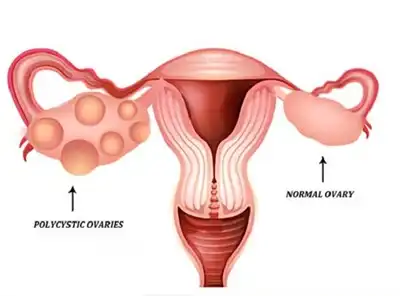
What is polycystic Ovary Disorder (PCOD) / (PCOS)?
Polycystic ovarian syndrome (PCOS) is a hormonal imbalance resulting from a surplus of androgens produced by way of the ovaries. Humans with PCOD produce abnormally excessive ranges of androgens from their ovaries. Your reproductive hormones become abnormal as a result. Consequently, missing periods, abnormal menstrual cycles, and uncertain ovulation are common in PCOS patients. Due to ovulation or the absence of ovulation, small follicular cysts—fluid-filled sacs containing immature eggs—can be visible on an ultrasound of your ovaries. Opposite to the period “polycystic,” PCOS isn’t always related to ovarian cysts. Cysts in the ovary pose no danger or pain.
PCOS is the leading cause of infertility among women and those born with a female gender designation. Additionally, it may make you less immune to other diseases. Your doctor can treat PCOS as per your symptoms and if you’re planning to get pregnant.
What symptoms indicate PCOD?
Few symptoms indicate PCOD:-
- Menstrual cycle irregularities: PCOD-affected women may experience irregular or missing periods (less than eight per year). They might also have menstruation every 21 days or more frequently. Menstruation can be discontinued with some women with PCOS. Periods might disappear for some women who have PCOD.
- Unusual hair growth: In this circumstance girls have dark, thick hair on their tummies, decreased returned, buttocks, thighs, neck, and face. A Lady who’s PCOD can face the trouble of balding and hair loss on the head. This condition is identified as hirsutism.
- Acne: Acne is an extra symptom of PCOD, which is most generally seems to be on the face, chest, and back. This influences nearly everyone who suffers from acne.
- Skin darkening: Females with PCOD can cause dark spots in the pores and skin. Those often increase at the back of the neck, encircling the neck, and sometimes the underarm location.
- Multiple cysts: Women with PCOD have cysts at the ovaries.
- Weight gain: PCOD-afflicted women frequently struggle to reduce weight. People with this genetic profile are more likely to develop insulin resistance, wherein the body becomes proof against the hormone insulin, which regulates blood sugar.
- Infertility: One of the most common reasons for female infertility is PCOD. While they’re having trouble getting pregnant, many girls find that they have PCOD.
- Tiredness: One of the many symptoms that people with PCOD may encounter is exhaustion.
- Mood Swings: Ladies with PCOS also have an elevated risk of excessive or on-the-spot temper swings, anxiety, and sadness due to hormonal imbalance.
What is the primary cause of PCOD?
The exact cause of PCOD is not known. However, according to experts, several factors play a role in PCOD:
- High levels of androgens: The ovaries and adrenal glands generate between 40% and 50% of the total testosterone produced by the body in healthy women. In PCOD, the ovaries produce more testosterone due to persistently high levels of insulin (hyperinsulinemia) and luteinizing hormone. Furthermore, high blood levels of free testosterone are caused by hyperinsulinemia, which stops the liver from generating sex hormone-binding globulin (SHBG).
- High levels of insulin: Blood ranges of insulin are accelerated in patients with PCOD. The adrenal specialized cells that make insulin are chargeable for controlling blood glucose degrees. Those cells trouble insulin to assist the frame in the usage of glucose for electricity while blood glucose degrees rise.
- Low-level inflammation: Low-grade inflammation is common in PCOS patients. The amount of inflammation in the body can be determined by blood tests that healthcare practitioners can do to detect white blood cell and C-reactive protein (CRP) levels.
How does PCOD affect fertility?
PCOD has a negative impact on fertility. It might be challenging for women with these illnesses to prepare for fertilization and their chances of a natural pregnancy because of irregular cycles.
Hormonal abnormalities in certain situations can also cause an irregular or non-existent ovulation. PCOD further increases the chance of miscarriage.
Does PCOS cause a miscarriage?
Although most women affected by PCOD can carry a pregnancy to term, having PCOD may raise your risk for specific pregnancy issues. Pregnancy-related side effects of PCOD include an elevated risk of hypertension, preeclampsia, and gestational diabetes and a premature delivery occurs when a pregnancy ends before 37 weeks or delivery via C-section because of diabetes, obesity, or hypertension.
What’s the procedure for diagnosing polycystic ovarian disease, or PCOD?
Polycystic ovarian disorder may be recognized by way of the presence of a minimum of the following:
- Irregular periods
- Signs or symptoms of androgen excess (e.g. pimples and excess hair growth)
- Polycystic ovaries on an ultrasound test
An endocrinologist, or specialist in hormone problems, conducts a physical examination to diagnose PCOS. In addition to checking for acne and other signs of elevated testosterone levels, he or she will also check you for increasing body and facial hair. Your menstrual cycle regularity is one of the medical history questions the doctor will ask you.
Additionally, they could request the subsequent tests:
- Blood Tests: Increased amounts of androgen may be detected with the help of blood tests for testosterone and the loose androgen index (FAI). So that you can determine the amounts of extra reproductive hormones that affect your menstrual cycle, you will, in all likelihood, additionally go through blood trying out. For instance, the follicle-stimulating hormone (FSH) or oestrogen, the female intercourse hormone.
- Pelvic Ultrasound: Your health practitioner or a consultant should perform a pelvic ultrasound to search for indications of PCOS, which includes ludes in, evolved eggs ings to your ovaries, large ovaries, or thickening uterine lining.
- Sexually active: Women may also benefit from a transvaginal ultrasound. A belly ultrasound does not offer as clear a photograph of your ovaries as this approach, which involves putting a probe into your vagina.
- Other tests: Our physician might order certain tests to determine your risk of heart disease (cardiovascular disease) and type 2 diabetes.
- i) A cholesterol blood test
- ii) A blood pressure test
- iii) A blood test for glucose tolerance.
What is the treatment for PCOD?
Your symptoms, medical records, other health issues, and choice to become pregnant will determine your healthcare practitioner’s treatment route. Medication, lifestyle alterations, or a combination of the 2 may be used as treatment alternatives.
If you don’t plan to become pregnant, then treatments include the following:
- Hormonal birth control: Birth manipulation capsules, patches, injections, vaginal rings, and intrauterine gadgets (IUDs) are many of the alternatives. Further to improving pimples and supporting with immoderate hair boom, hormonal delivery manages aids to govern your menstrual cycle.
- Insulin: Sensitizing medication used to treat diabetes. It functions by improving the body’s insulin processing. Some PCOS patients experience improvements in their menstrual cycles once their insulin levels are under control.
- Drugs that block testosterone: A few drugs can block testosterone’s effects. This aids in regulating acne or hair development. Discuss whether this remedy is appropriate for you with your healthcare physician.
- Lifestyle modifications: Ingesting a balanced food plan and maintaining a healthy weight can help your insulin tiers.
- Treatment for PCOS: Involves the following if you plan to get pregnant now or in the future:
- Treatments to cause ovulation, or the release of an egg: Ovulation is the first step in a successful pregnancy. It has been confirmed that several medications cause ovulation in PCOD patients. Gonadotropins are given directly while clomiphene and letrozole are taken orally.
- Surgery: Surgery can assist you in regaining ovulation by removing the androgen-producing tissue from your ovaries. These days, doctors seldom perform this procedure since they have access to more sophisticated medications.
- In vitro fertilization (IVF): When taking medicine doesn’t help with ovulation, this is an alternative for PCOS patients. In this treatment, your partner’s sperm fertilizes your egg in a lab before the physician places it in your uterus.
Is PCOD ever cured?
Although PCOS has no FDA-approved cure, your doctor can help you manage your symptoms. PCOD can have varying impacts over time, making you less conscious of the illness. However, that cannot be completely cured by any medication.
Can PCOD or its effects be prevented in the future?
Although there isn’t always a recognized approach to preventing PCOD, you can manage your signs with minor adjustments. For instance, you can prevent the signs and symptoms of PCOD by maintaining a wholesome weight in your frame, consuming a balanced weight loss program, and exercising frequently.
How can you deal with PCOD?
Maintaining a healthy body weight, consuming nutritious food, and getting daily exercise are excellent strategies to cope with PCOD. Positive lifestyle modifications that modify hormone stages can regulate your menstrual cycle, and your symptoms might enhance.
Beauty techniques or consulting with a dermatologist may be beneficial if excessive hair growth or pimples are undermining your self-assurance.
Remember that you’re now not alone when you have PCOD and are trying to conceive. One in ten persons suffers from PCOD. If you want to turn out to be pregnant, your healthcare professional will collaborate with you to make that happen.
Why Tender Palm IVF & Fertility Center for Polycystic Ovarian Disease (PCOD) Treatment in Lucknow, India?
Tender Palm IVF & Fertility Center offers Best Polycystic Ovarian Disease (PCOD) Treatment in Lucknow, India. Our expert fertility team provides accurate hormonal assessments, advanced ultrasound diagnostics, and customized treatment plans including lifestyle management, ovulation induction, and fertility-focused therapies. We focus on restoring hormonal balance, improving ovulation, and enhancing fertility outcomes. With compassionate care, modern technology, and proven results, we are committed to helping women manage PCOD effectively and achieve their reproductive goals.