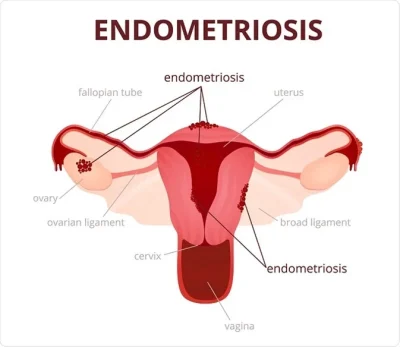
What is Endometriosis?
Tissue that grows outside the cavity and resembles the uterus lining is called endometriosis. Endometriosis is the formation of endometrial-like tissue on the lining of your pelvis, colon, and ovaries. Tissue like endometrial can sometimes spread outside the pelvic place; however, this is uncommon. A portion of tissue that grows outside your uterus and replicates endometrial tissue is referred to as an endometrial implant.
Formerly, endometriosis was frequently misdiagnosed as pelvic inflammatory disease (PID). Researchers are unsure about the suitable etiology of endometriosis. At the same time as that is happening, they are aware that endometriosis isn’t added on through STDs or other STIs.
What are the symptoms of Endometriosis?
Pelvic pain is the primary symptom of endometriosis. It’s frequently connected to the menstrual cycle. Although many people have cramps throughout their periods, endometriosis sufferers often report having significantly greater menstrual discomfort than normal.
Common endometriosis symptoms include:
- Painful periods
- Pain with sex
- Discomfort when urinating or moving the intestines
- Excessive loss of blood: You may occasionally experience high menstrual flow or intermenstrual bleeding
- Infertility: Endometriosis may also sometimes be observed for the primary time all through checks associated with infertility remedy.
- Other symptoms: You could have bloating, nausea, constipation, diarrhea, or exhaustion. Before or during menstruation, those symptoms are extra conventional.
Can STDs increase the risk of endometriosis?
STIs can raise the possibility of endometriosis developing symptoms, even though there is no connection between the two conditions. One of the primary elements that can contribute to the pathology of endometriosis is inflammatory conditions. Infections from endometriosis can irritate in and of themselves. Moreover, endotoxins released by bacteria that cause STIs can also cause the synthesis of inflammatory chemicals.
Microorganisms, particularly Escherichia coli, are more common in the menstrual blood of patients with endometriosis. Also, endotoxin stages are higher. Sicknesses that begin within the lower genital tract and unfold to the top genital tract can be a result of an imbalance in the microbiota there. In fact, intestinal microorganisms that migrate frequently cause pelvic inflammatory sickness instead of chlamydia and gonorrhea.
What causes Endometriosis and STDs?
Although the exact cause of endometriosis is unknown, there are several theories that attempt to explain how and why the condition develops:
- Transfer via blood or lymphatic systems, Endometrial tissues get moved to different body parts by the blood or lymphatic systems in a manner identical to how cancer cells spread throughout the body.
- Direct transplantation, After a surgical procedure like an abortion or C-section, endometrial cells can bond to the abdominal or other body walls.
- Genetics: Since endometriosis seems to be found in a few households more than others, a genetic component can be worried.
- When a woman experiences reverse menstruation, endometrial tissue enters her abdomen and fallopian tubes instead of exiting her body throughout her menstrual cycle
- Transformation: Different cells within the frame can differentiate into endometrial cells and begin multiplying outside the endometrium.
How does endometriosis affect woman’s pregnancy?
Unfortunately, there are several ways that endometriosis might affect your ability to conceive:
- For an egg to end up implanted within the uterine lining, it needs to skip via the fallopian tube and enter the uterus in which it will be fertilized. If a female has endometriosis, her egg won’t be able to pass through the uterus because of an abundance of tissue.
- Less possibilities of successful fertilization and pregnancy may result from endometriosis’s scarring and infection of the ovaries and fallopian tubes.
- A hypothesis posits that endometriosis induces inflammation, which may exacerbate the damage to an egg or sperm.
- According to recent studies, endometriosis negatively affects the immune system and increases the risk of an allergic diagnosis. Successful pregnancy is complicated in these situations.
- Endometriosis can alter the hormonal conditions surrounding eggs and negatively affect egg quality.
What is the process of the diagnosis of endometriosis and STDs?
There is no specific test to diagnose endometriosis and the symptoms can be invisible, making it challenging for the doctor to diagnose. The symptoms may also seem similar to those of other diseases.
There are some possible diagnostic techniques:
- Pelvic exam
- Imaging procedures like an MRI or ultrasound
- Laparoscopy
- Biopsy
Surgical laparoscopy is the most reliable approach to confirm an endometriosis study. During this procedure, the surgeon makes a tiny incision in the pelvic area to insert a laparoscope, which provides images of tissue variances.
What are the treatments for Endometriosis?
Although there is still no treatment for endometriosis, there are ways to manage the discomfort and infertility it causes.
When deciding which course of treatment is appropriate for endometriosis symptoms, medical professionals take into account several criteria, including:
- How old are you?
- How severe are your symptoms?
- What type of illness is it?
- Despite whether you desire kids
Not every woman with endometriosis responds positively to every treatment. Furthermore, endometriosis symptoms can return after stopping treatment or, in the case of surgery, when some more time has passed after the procedure.
Medication for endometriosis symptoms, such as hormone therapy and painkillers, can be managed. Hormonal alternatives include gonadotropin-releasing hormone (GnRH) medicines, which block the synthesis of menstrual hormones, and birth control, which helps with lighter, less painful periods. Another alternative is to use Danazol (Danocrine®), however this medication may induce sporadic or non-existent menstrual cycles. It’s vital to speak with a healthcare expert before beginning any pharmaceutical routine, seeing that it is now not advised to apply them while pregnant or whilst seeking to emerge as pregnant.
Anti-inflammatory drugs (NSAIDs) and over-the-counter pain medications are two ways to relieve endometriosis discomfort. Surgical treatment might also assist with remedy and confirmation of the ailment and increase fertility.
The degree of endometriosis can influence when symptoms recur. Laparoscopy and hysterectomy are surgical treatments that can be paired with medicines for optimal outcomes. IVF, or in vitro fertilization, can help reap conception by stopping the menstrual cycle at the same time. It’s feasible to offer GnRH pictures and nasal sprays orally. Every other hormonal drug that prevents the synthesis of hormones that cause menstruation is danazol (Danocrine®). But if you stop taking those medicines, your symptoms can come again, so it’s now not an excellent idea to take them even as pregnant or trying to get pregnant.
Is it possible to Prevent Endometriosis?
There is no way to avoid endometriosis. However, the following may minimize your possibility of contracting the disease.
It is now believed to be less frequent in persons who:
- Have experienced multiple pregnancies.
- Breast feed (chest feed).
What is the impact of endometriosis on your life?
Both physically and emotionally, endometriosis can have a significant effect on your life. Even though some people may have more severe symptoms than others, the illness will undoubtedly provide difficulties for you.
You might find yourself experiencing chronic discomfort that will not let you have an easy time with your life or enjoy intimate relationships with your spouse. Emotionally, the impact is not necessarily any easier, as you have perhaps prepared a future child but are now unable to carry through with it. With endometriosis, medication or surgery could become part of your daily life even if you have no intentions of conceiving and if the pain is bearable.
Can someone with endometriosis become pregnant?
Yes, you can get pregnant. However, it may be harder for those with endometriosis. Talk to your doctor about the best course of treatment if you have endometriosis and want to get pregnant. Surgery might be needed to treat endometriosis. Together, you and your doctor will decide on the best way to help you get pregnant.
What time should I go see my doctor?
If you are suffering from symptoms of endometriosis like pelvic pain or heavy prolonged menstruation, consult with a medical professional. A health care professional can assess and conduct testing to determine whether endometriosis is the cause of your symptoms
What questions should I ask my healthcare provider?
If you have endometriosis, it is natural to have questions. You may want to ask the following questions:
- What do you recommend me to do?
- Can endometriosis recur after treatment?
- Does having endometriosis affect my chance of getting pregnant?
- Am I more prone to other diseases with endometriosis?
Why choose Tender Palm IVF & Fertility Center for Endometriosis Treatment in Lucknow, India?
Tender Palm IVF & Fertility Center offers the best endometriosis treatment in Lucknow, India. We have an experienced team of fertility specialists and gynaecologists who use modern technology to diagnose and treat female fertility conditions such as endometriosis. Our team follows international safety standards and has years of experience treating female infertility. We provide accurate evaluation of underlying causes, personalized treatment plans, and minimally invasive procedures with high success rates at an affordable cost. At Tender Palm IVF & Fertility Center, we ensure safe, effective, and result-oriented treatment for female infertility in Lucknow, India.