


Introduction
Dental fitness plays a crucial role in overall well-being, for which patients regularly choose between fillings, crowns, or more advanced options when restoring broken teeth. At the same time, inlays and onlays are a reliable, conservative, and aesthetically beautiful solution that falls between a traditional filling and a complete crown. They offer long-lasting aid for teeth that have sustained mild damage or decay.
Whether because of cavities, harm, or failing antique fillings, inlays and onlays can rejuvenate your smile with precision and power. Let’s explore what they may be, how they paint, and why they’re considered one of the simplest techniques in restorative dentistry.
What Are Inlays and Onlays?
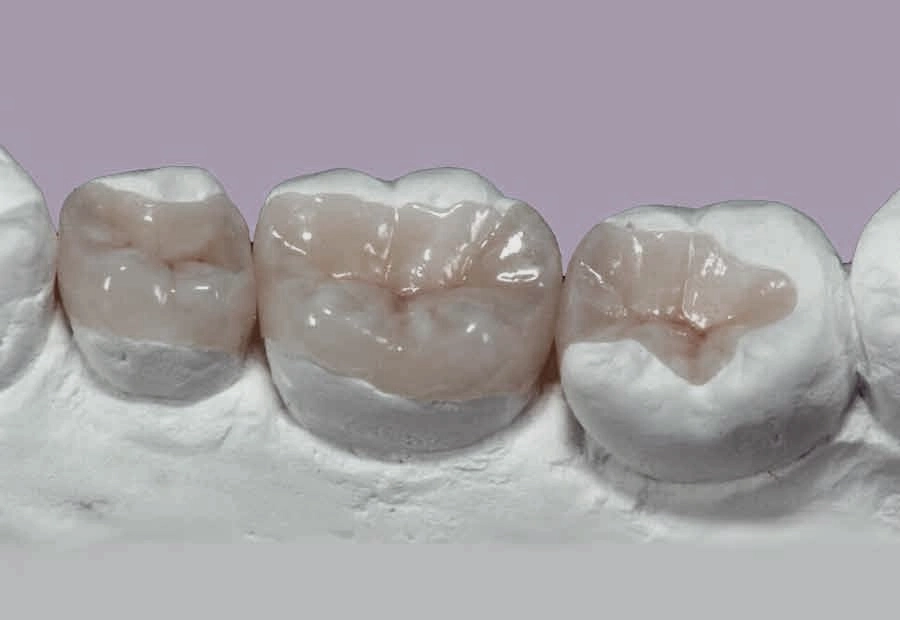
Inlays and onlays are styles of oblique dental restorations. Unlike traditional fillings, which can be moulded immediately in the mouth, inlays and onlays are crafted outside the mouth—generally in a dental lab—and then cemented onto the tooth.
- Inlays are helpful when the harm is inside an enamel's cusps (the raised points). They take a seat within the tooth like a puzzle piece.
- Onlays are effective when the harm is more sizable, frequently protecting one or more cusps or extending over the enamel’s surface. Onlays are sometimes called partial crowns.
Both restorations are possible with substances like porcelain, composite resin, or gold, with porcelain being the most popular choice because of its natural appearance.
Ideal Candidates for Inlays and Onlays
You are probably an appropriate candidate for inlays or onlays if:-
- You have a reasonably decayed or fractured enamel.
- There’s insufficient tooth structure left for a filling.
- You want to keep away from the enamel reduction worry in crown placement.
- You have a big, worn-out filling that wishes to choose a replacement.
- You desire an extended-lasting, aesthetic recuperation.
Dentists often suggest inlays and onlays for molars and premolars, which undergo the most chewing stress and are vulnerable to wear and tear.
Benefits of Inlays & Onlays
There are several compelling motives why inlays and onlays are increasingly becoming desirable by dentists and sufferers:-
- Durability - These restorations are ultimate as porcelain and gold inlays/onlays can serve reliably for 10 to 30 years, depending on usage and renovation.
- Natural Aesthetics - Porcelain inlays and onlays are colour-matched to blend seamlessly with your natural tooth, making them almost invisible once placed.
- Tooth Preservation - Unlike crowns, which require extensive reshaping, inlays and onlays hold a bigger portion of your natural tooth, assisting in maintaining long-term tooth integrity.
- Reinforced Structure - They help weakened teeth tremendously, restoring function and distributing chewing forces more evenly.
- Stain Resistance - Especially in porcelain versions, these restorations withstand staining from espresso, tea, and other ingredients better than composite fillings.
Procedure: What to Expect
Getting an inlay or onlay is usually a step process, except that the dental practice uses the same-day CAD/CAM technology.
Step 1: Examination and Tooth Preparation
- The dentist evaluates the enamel with an exam and X-rays.
- Damaged or decayed fabric shows recovery, and the enamel is cleaned and fashioned.
- An effect or virtual experiment is taken and dispatched to a lab for custom fabrication.
- A temporary recovery helps to defend the tooth.
Step 2: Placement of Inlay or Onlay
- The transient recuperation ends.
- The custom inlay or onlay gets checked for suit, colour, and contour.
- It’s then entirely bonded with a strong dental adhesive.
- The healing is polished and altered for chunk consistency.
Each visit is painless, especially with local anaesthesia during education.
Materials Used
Inlays and onlays are products made by using distinct substances depending on your wishes:-
- Porcelain: Popular for its enamel-like appearance and durability.
- Composite Resin: Less costly and more flexible, but no longer as long-lasting.
- Gold: Extremely long-lasting and best for patients who don’t think of seeing metal.
Your dentist will recommend the quality option primarily based on your oral circumstances, aesthetic desires, and budget.
Aftercare & Maintenance
Once your inlay or onlay comes in positioned, it requires the same degree of care as your natural teeth:-
- Brush twice a day with fluoride toothpaste.
- Floss day by day to save you from plaque buildup between teeth
- Avoid biting hard foods or gadgets like pens or ice.
- Schedule an ordinary dental visit for expert cleanings and checks in the United States.
Proper care allows recuperation to remain functional and attractive for many years.
Why Choose Tender Palm Dental Hospital for Inlays & Onlays?
At Tender Palm Dental Hospital, you’ll obtain precision-crafted inlays and onlays tailor-made for your dental anatomy. Our superior diagnostic gear, cutting-edge substances, and skilled staff ensure your remedy is correct, snug, and long-lasting. We prioritise minimally invasive care that preserves natural tooth structure while restoring complete function and aesthetics. Whether replacing vintage fillings or treating a new cavity, our team is committed to excellence at each step of your dental journey.
May I Help You.
Our Expert

Our Expert

To Schedule an Expert Consultation for Dental Treatment in Lucknow, India
contact@tenderpalmdental.com
 Request a Callback